
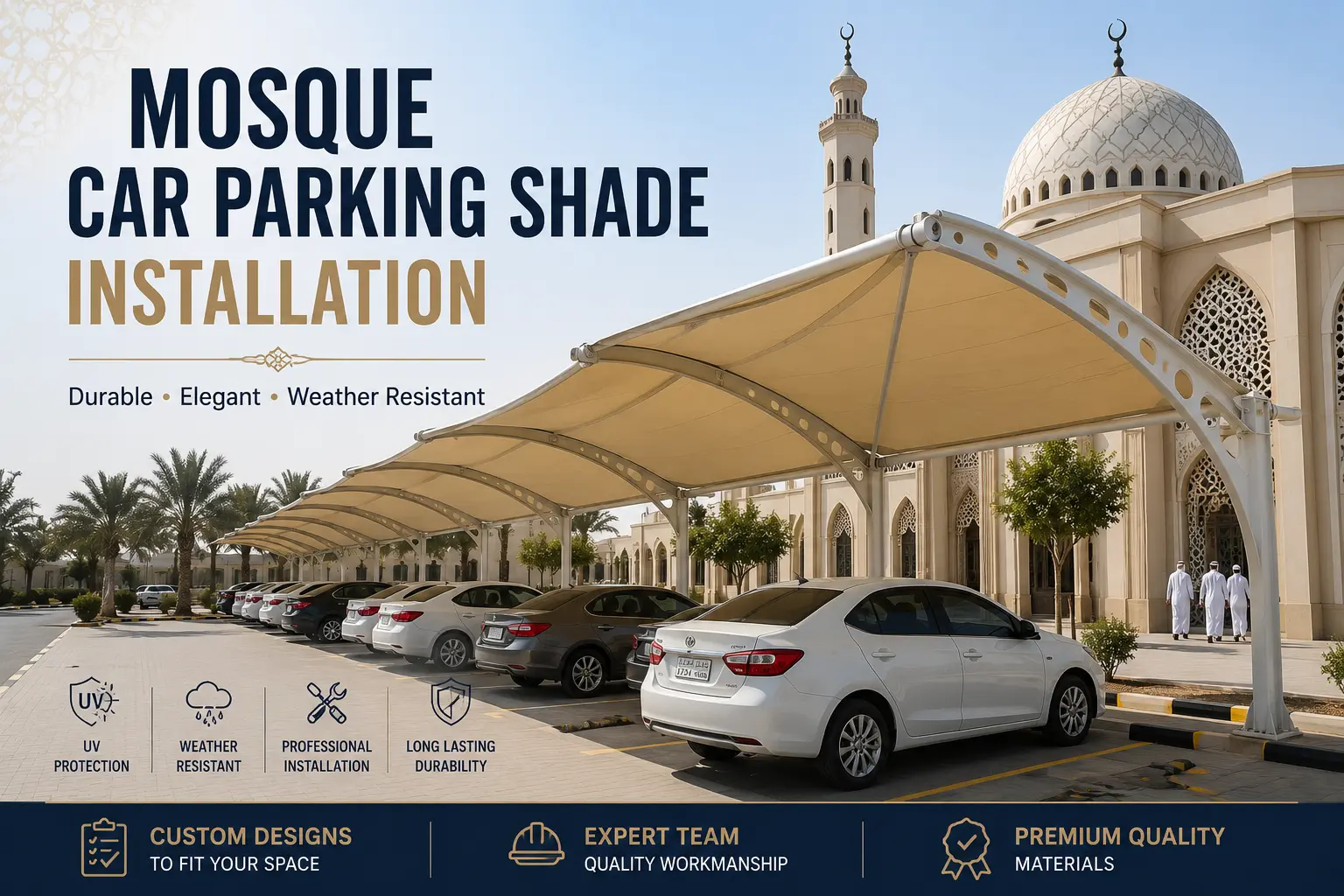
Mosque car parking shade installation means designing and anchoring UV-resistant shade structures over mosque parking areas to protect worshippers’ vehicles from Saudi Arabia’s extreme heat, temperatures that regularly exceed 45°C in summer.
Thank you for reading this post, don't forget to subscribe!A properly installed mosque parking shade serves more than just vehicles; it directly improves visitor comfort, supports crowd management during Friday prayers, and reflects the mosque’s commitment to community care.
The right structure must balance structural durability with sensitivity to the mosque’s architectural identity.
Why Do Mosques In Saudi Arabia Need Dedicated Parking Shades?
Mosque parking isn’t like a mall or office parking lot. The usage pattern is concentrated, predictable, and community-critical, which changes what the shade structure needs to deliver.
The Real Cost Of Unshaded Mosque Parking
Metallic car surfaces under direct Saudi sun absorb heat rapidly. Dashboards crack, batteries degrade, and upholstery fades, all from prolonged unshaded exposure. For elderly worshippers and families arriving for peak prayer times, returning to a vehicle that has been sitting in 45°C+ heat is a genuine comfort and safety issue.
Beyond vehicles, unshaded parking areas create a poor first impression for a community facility built around hospitality. A mosque that invests in UV radiation protection for its congregation’s vehicles signals a standard of care and efficiency that matters deeply to visitors.
Crowd Flow And Pedestrian Safety
Orderly vehicle movement during high-traffic prayer times is fundamentally a planning question. Defined shaded parking bays naturally guide drivers and reduce confusion during simultaneous arrivals and departures.
Well-placed shade structures also serve as visual waypoints for first-time visitors navigating large mosque complexes. Integrated walkway canopies connecting parking areas to the mosque entrance further improve pedestrian safety, especially for elderly visitors and children.
What Shade Types And Designs Work Best For Mosque Parking?
Mosque parking shades carry aesthetic responsibilities that standard commercial installations don’t, the structure must feel architecturally consistent with its surroundings.
High-Coverage Shade Structures For Dense Parking
Cantilever shades, both single and double, maximize parking density per bay without obstructive center posts. T-cantilever designs handle long vehicle rows efficiently, making them the practical standard for large mosque parking fields.
For mosques requiring a more distinctive architectural statement, pyramid arch design parking shades deliver a recognizable silhouette that complements traditional mosque aesthetics.
Mega-span tensile membrane canopies suit the largest congregational mosques where dozens of bays must be covered under a single contiguous structure.
Aesthetic Alignment With Mosque Architecture
Arabic geometric patterns and Islamic color palettes, neutrals, greens, and earth tones, can be specified into the fabric and frame finish without any structural compromise. Powder-coated steel in custom colors integrates cleanly into the surrounding architecture.
Modular shade designs allow a mosque to install initial coverage and expand as congregation size grows, a practical consideration for newer mosques in developing areas of Riyadh and Dammam.
What Materials Are Used In Mosque Parking Shade Installation?
Material choice for mosque shades involves a trade-off between breathability, waterproofing, lifespan, and visual quality.
HDPE shade net at 300+ GSM remains the most common choice, breathable, UV-resistant, and proven in Saudi desert conditions. It allows airflow under the canopy, which meaningfully reduces heat felt by worshippers walking to and from their vehicles.
PVC-coated fabric delivers complete waterproofing and a 12–20 year lifespan, preferred for premium mosque installations where appearance and long-term durability justify the higher material cost.
For landmark mosque projects, tensile membrane fabric on galvanized steel frames with aluminum fittings offers the widest spans and the most architecturally refined finish. At Baqar Shades, material specifications are matched to both the mosque’s budget and its long-term maintenance capacity.
How Is A Mosque Car Parking Shade Installed Step By Step?
Installation at a mosque follows a more involved process than a standard residential job, site complexity and the need for municipal approval in many Saudi cities adds planning time upfront.
Pre-Installation Survey, Drawing, And Approval
The process starts with a site survey and measurement, mapping existing structures, access points, drainage, and the prayer schedule to minimise disruption during installation. Engineering drawings are prepared and submitted for municipal approval where required, a step professional installers manage end-to-end.
Foundation excavation and concrete footing depth are specified based on the shade type and wind load ratings required for the location. In exposed mosque sites near open desert, deeper footings are standard to handle 90–120 km/h sandstorm winds.
Frame Assembly, Fabric Tensioning, And Handover
Once footings cure, steel post installation and cross-beam assembly proceed in sequence. Fabric panels are cut, edge-finished, and tensioned using anchor clamps and securing ropes, checked for even pull across all bays.
Final quality inspection covers structural joints, fabric tension uniformity, and drainage clearance. A maintenance briefing at handover covers 2–3 month cleaning cycles, post-storm tensioning checks, and the recommended schedule for annual professional inspection.
Final Thoughts On Mosque Car Parking Shade Installation
A mosque parking shade is not just a structural upgrade, it is a visible act of care toward every worshipper who visits. Getting the material, design, and installation right means the structure performs reliably through decades of Saudi desert conditions without constant upkeep.
Choosing a certified installer who understands both the structural and aesthetic demands of mosque environments makes all the difference between a shade that lasts and one that needs replacing within a few years.
Frequently Asked Questions
What Type of Parking Shade Is Best for a Mosque?
Cantilever and T-cantilever shades maximize coverage per bay for high-density mosque parking. Pyramid arch design shades suit mosques prioritizing architectural compatibility. For large congregational mosques, mega-span tensile membrane canopies provide the widest uninterrupted coverage.
How Long Does Mosque Parking Shade Installation Take?
Most mosque installations complete in 3–7 days. Larger complexes with multiple shade rows may require 1–2 weeks, primarily due to the concrete curing window and multi-phase frame assembly required for long bay rows.
What Materials Are Best for Mosque Parking Shades in Saudi Arabia?
300+ GSM HDPE for breathable, cost-effective coverage. PVC-coated fabric for waterproofing and a 12–20 year lifespan. Tensile membrane on galvanized steel for premium congregational mosque installations requiring both wide spans and refined aesthetics.
Can Mosque Parking Shades Handle Saudi Sandstorms?
Yes, structures engineered to handle winds of 90–120 km/h with deep concrete footings and properly anchored galvanized steel posts are standard for mosque installations in exposed Saudi locations.
Do Mosque Parking Shades Require Municipal Approval in Saudi Arabia?
In most Saudi cities, large shade structures on mosque premises require engineering drawings and formal municipal approval before installation begins. A qualified professional installer handles this process as part of the full service, check Baqar Shades for certified installation support across all Saudi regions.