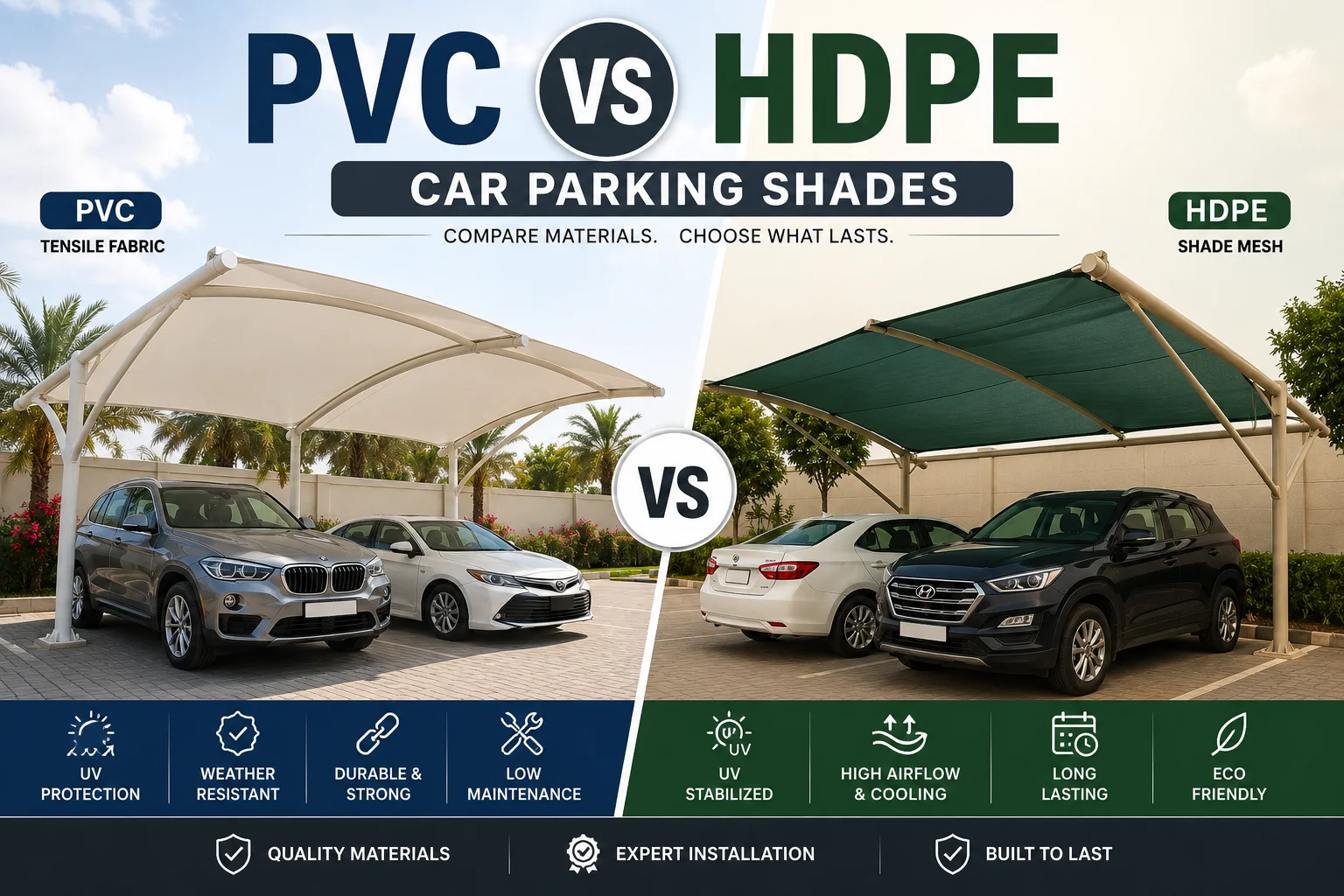
Choosing between PVC and HDPE parking shade fabric depends on the project’s need for shade, airflow, rain protection, appearance and approved technical requirements. The selected fabric must be considered together with the structural design, installation and site conditions.
HDPE shade fabric
HDPE shade fabrics are typically knitted or woven and permit airflow through the canopy. They can be suitable for car parks where ventilation and sun shading are priorities. Their shade factor, UV performance, weight and other properties vary by product and must be checked against the manufacturer’s datasheet. Ordinary permeable HDPE shade fabric should not be assumed to be waterproof.
PVC-coated fabric
PVC-coated polyester fabrics are commonly considered for projects requiring a solid membrane and rain protection. Check the selected product’s water resistance and the design of seams, slope and drainage. Coating, colour, weight and other properties vary between products; PVDF coatings may be available for particular specifications.
PVC vs HDPE: what to compare
| Requirement | HDPE shade fabric | PVC-coated fabric |
|---|---|---|
| Airflow | Typically allows air through the fabric | Generally less permeable |
| Rain protection | Ordinary shade mesh is permeable | Check the fabric and complete canopy design for the required rain protection |
| UV and shade performance | Check the selected fabric’s test data | Check the selected membrane’s test data |
| Fire performance | Only claim a rating supported by the specific fabric’s test certificate | Only claim a rating supported by the specific fabric’s test certificate |
| Warranty and service life | Depend on the product, installation, exposure and warranty terms | Depend on the product, installation, exposure and warranty terms |
Wind loads and structural design
Fabric weight alone does not establish a shade’s wind capacity. The complete structure, fabric, connections, foundations and site exposure must be assessed against the agreed project design criteria. Request calculations and drawings where required, and confirm engineering deliverables in the quotation.
Project example: HDPE parking shades in Dhahran
For Saudi Aramco Building 3191 in Dhahran, Baqar Shades completed single and double cantilever parking shades covering 3,528 m² for 210 cars. The project used GALE 340 GSM HDPE fabric and galvanized, powder-coated steel. See the Dhahran project details and photographs.
What to confirm before ordering
- Parking layout, location, clearances and required shade coverage.
- Whether ventilation or rain protection is the priority.
- Manufacturer’s fabric datasheet, weight, UV and fire test documentation where required.
- Applicable design criteria, drawings, structural calculations and foundation scope.
- Supply, delivery, installation, maintenance and written warranty terms.
Read our parking shade specifications checklist and guide to shade materials, or request a project-specific quotation.
Frequently asked questions
Is HDPE shade cloth waterproof?
Ordinary HDPE shade mesh is permeable. If rain protection is required, check the proposed material and complete canopy design before selecting it.
Does all shade fabric have a fire rating?
No single rating applies to all PVC or HDPE products. Ask for the test certificate for the exact fabric proposed and check it against the project’s requirements.
How long will a shade last?
Service life depends on fabric grade, local exposure, design, installation and maintenance. Review the manufacturer’s product documentation and the applicable written warranty.
Can Baqar Shades supply without installation?
Supply-only requirements can be assessed after receiving the drawings, quantities, specifications and delivery location.