
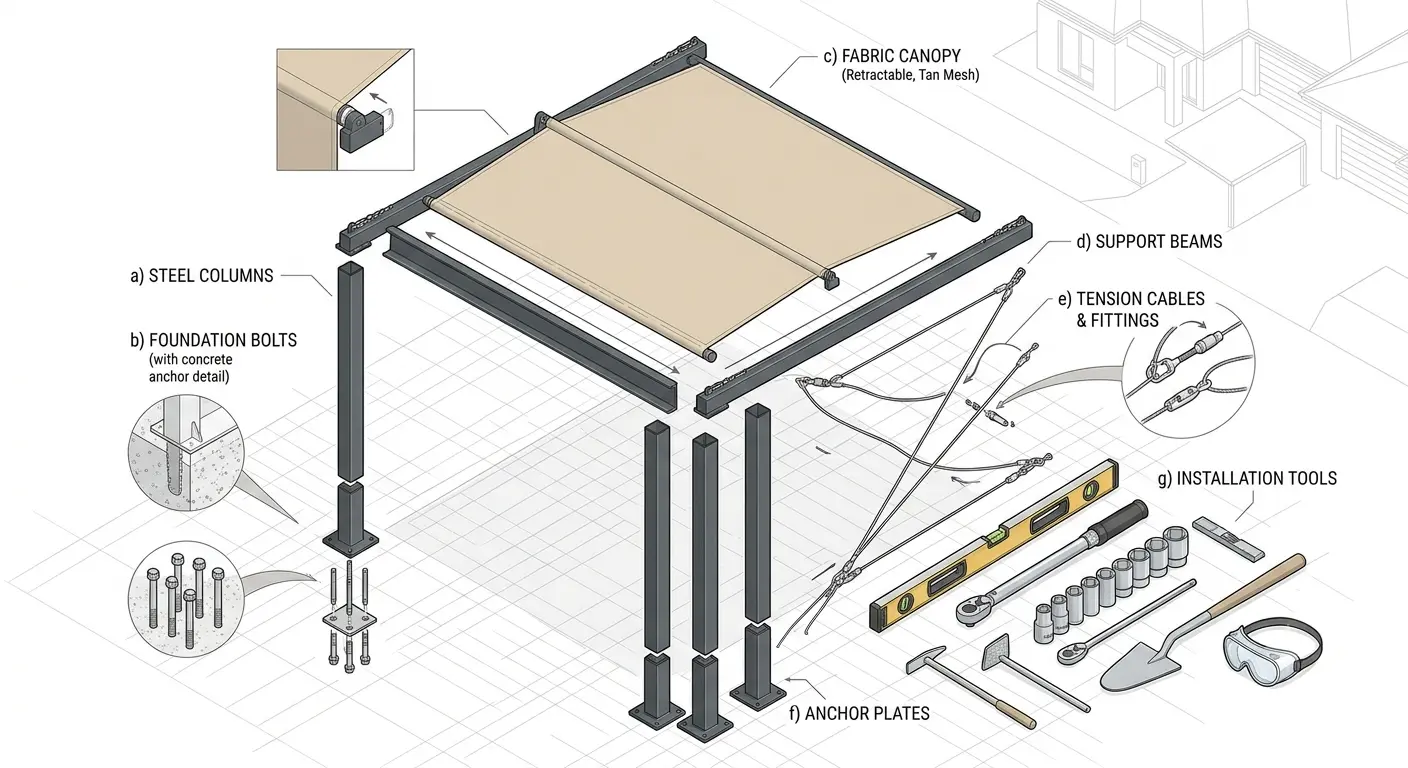
Car parking shade installation means anchoring galvanized steel posts into concrete footings, then tensioning a UV-resistant fabric over a structural frame, shielding your vehicle from Saudi Arabia’s extreme heat, UV rays, and sandstorms.
A correctly installed car parking shade lasts 10–20 years with minimal upkeep.
What Should You Do Before Installing A Car Parking Shade?
Preparation is what separates a shade that lasts decades from one that fails in the first storm. Getting the groundwork right saves time, money, and structural headaches down the line.
Evaluate Your Space And Mark Pole Positions
Measure the parking area precisely before any drilling begins. Mark where each steel post will be anchored; a cantilever shade needs offset poles, while a connected central pole design requires center-aligned footings.
Always check for underground utilities and overhead obstructions first. Wind exposure, vehicle count, and available space all influence footing depth. In Saudi desert conditions, posts typically require deeper excavation than in temperate climates.
How To Choose The Right Shade Material For Saudi Arabia’s Climate
| Fabric Type | Best For | UV Block | Airflow |
| PVC Tarpaulin | Full waterproofing, heavy rain | Very High | Low |
| HDPE Shade Net | Ventilated residential use | High | High |
| PTFE Membrane | Premium commercial projects | Highest | Moderate |
| Polyester Mesh | Lightweight portable use | Moderate | Very High |
For most Saudi installations, HDPE and PVC remain the top choices. HDPE allows airflow to reduce heat buildup, while PVC tarpaulin suits locations where full waterproofing is the priority.
How Are Steel Posts Anchored for Car Parking Shades?
This is the most structurally critical phase of the entire installation. Everything above ground depends on how well the foundation below is executed.
Excavation, Concrete Pouring, And Curing
Excavate footing holes to 60–90 cm depth for residential installs, deeper for commercial structures. Insert galvanized steel posts, check vertical alignment with a spirit level, then pour concrete. Allow a 24–48 hour curing window before applying any structural load.
Rushing this step is the most common installation mistake. Poorly cured footings fail under winds up to 90 km/h, exactly the conditions that hit Dammam and Jeddah during sandstorm season.
Cross-Beam And Frame Attachment: What Gets Bolted Where
Attach cross beams and secondary frame members using structural bolts once posts are fully set. Powder-coated steel connections resist corrosion better than bare metal, critical in coastal cities.
Tighten all joints to manufacturer torque specs, since loose connections are the primary long-term failure point. For tensile shades and custom shade structures, this stage also includes installing perimeter tension cables that define the fabric’s final geometry.
Correct Way To Tension And Secure Car Parking Shade Fabric
Once the frame is solid, the fabric work begins, and this stage is where the shade’s performance and lifespan are truly determined. Cutting, finishing, and tensioning all need to be done with precision.
Cutting, Edge Finishing, And Seam Reinforcement
Cut the shade fabric to precise dimensions, leaving allowance for hemming. Reinforce all edges, this is where most premature fabric failures begin. For PVC parking shades, heat-welded seams outperform stitched ones against water infiltration.
For HDPE nets, knotted or welded perimeter rope delivers the most secure anchoring points. Never skip edge binding rated for outdoor UV exposure; degraded edges unravel faster than the fabric itself.
Fabric Tensioning Determines Long-Term Shade Performance
Attach fabric using anchor clamps or tensioning ropes, applying even pull across all sides. Uneven tension creates stress points that accelerate wear and cause premature sagging. A properly tensioned structure should feel drum-tight with zero slack.
This is also where adjustable angle cantilever designs prove their value, you can orient coverage to intercept peak afternoon sun, which matters most in Saudi Arabia’s intense summer climate.
How Do You Maintain A Car Parking Shade After Installation
Installation is just the beginning; consistent maintenance is what protects your investment over the long term. Saudi Arabia’s heat, dust, and sandstorms demand a more attentive upkeep routine than most climates.
Routine Cleaning, Inspection, And Storm Checks
Clean shade fabric every 2–3 months using mild soap and water. Avoid harsh chemicals that strip UV-resistant coatings. After any heavy sandstorm, inspect all rope connections, clamps, and frame joints before the next wind event hits.
Check steel post bases regularly for early rust or corrosion, especially at the concrete footing line where moisture collects. Touch up chipped powder-coat paint immediately to stop metal degradation from spreading.
Why Annual Professional Inspection Protects Your Investment
A yearly specialist check covers fabric tensioning, structural integrity, and hardware condition. At Baqar Shades, post-installation support is built into the service, ensuring your structure continues to block up to 98% of UV rays and hold up through the full warranty period of up to 20 years on the frame.
Frequently Asked Questions
How Long Does Car Parking Shade Installation Take in Saudi Arabia?
A single residential unit typically completes in one day. Larger commercial projects with multiple bays take 2–3 days, mostly due to the mandatory concrete curing window before the frame can carry load.
What Is the Best Material for Car Parking Shades in Saudi Arabia?
HDPE shade net suits most residential settings, lightweight, breathable, and effective at cutting interior cabin heat. PVC tarpaulin is better where full waterproofing is needed. For premium commercial or institutional sites, PTFE membrane delivers the highest UV resistance and longevity.
How Do I Maintain My Car Parking Shade?
Clean every 2–3 months with mild soap and water. Inspect frame joints for corrosion after sandstorm seasons. Check fabric tension regularly. An annual professional inspection catches wear before it becomes a structural problem.
Can Car Parking Shades Withstand Saudi Arabia’s Sandstorms?
Yes, quality shades are engineered to resist winds up to 90 km/h. The critical factor is correct galvanized steel post anchoring with adequate concrete footing depth. Shortcutting the anchoring stage is the leading cause of shade failure during desert storm events.
How Much Does Car Parking Shade Installation Cost in Saudi Arabia?
Cost depends on size, material, and design complexity. A basic single-car HDPE shade is the most affordable option. Multi-bay tensile membrane canopies for commercial sites require a custom quote based on structural requirements and site conditions.